Worldbuilding in Claudesidian
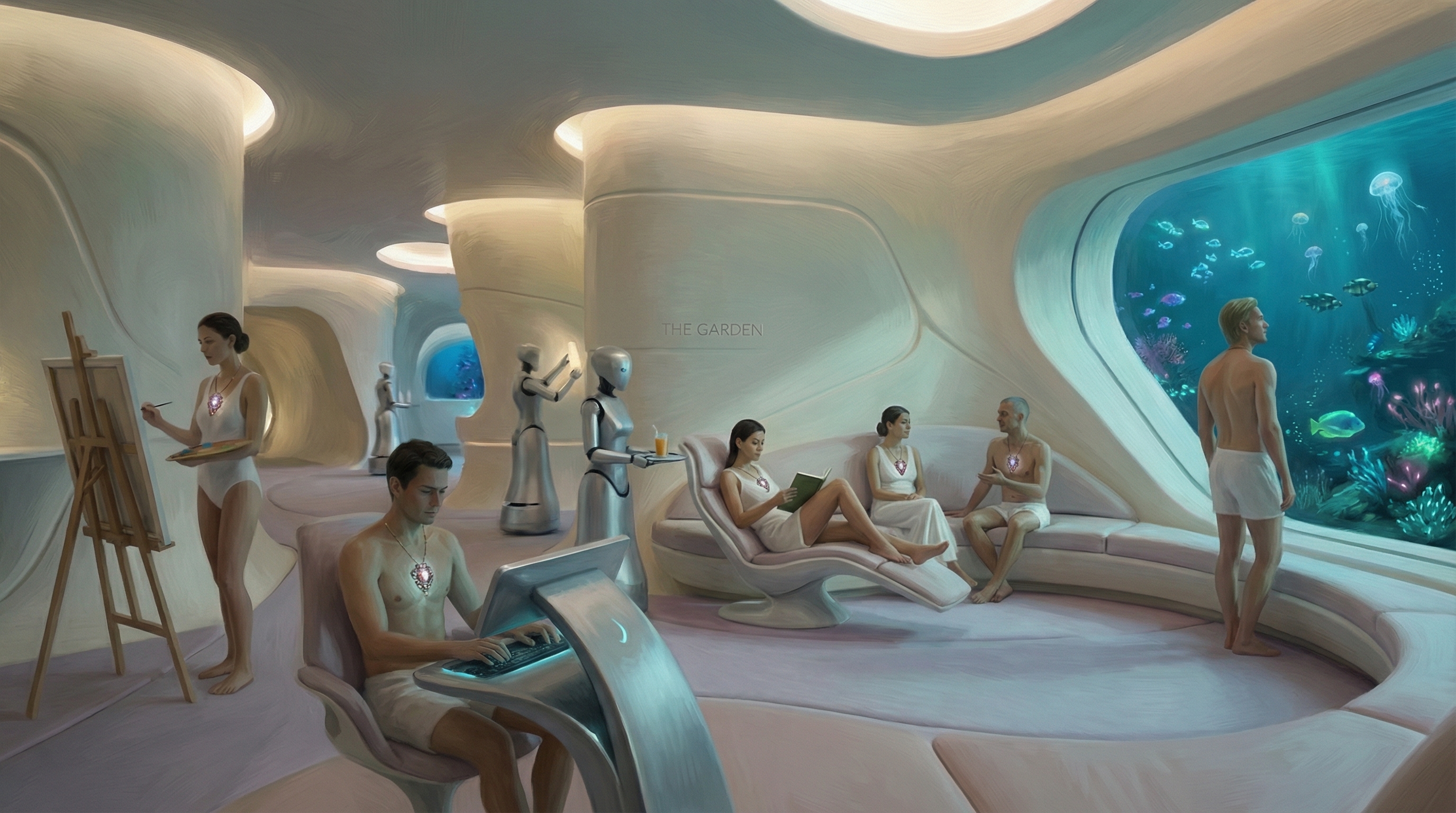
From one of the three post-ASI factions inhabiting my exoplanet world
My gateway drug into the world of computers c. 2020 was the networked note-taking apps, Roam Research and Obsidian. These apps promise the user a galaxy-brained interface for deep thinking via an interlinked network graph of text files.
Though they’re fascinating and beautiful, they’re also a little dorky and can lead to a recursive hell of self-reflection if you’re not careful. I’ve tended to my Obsidian vault daily for the last five years, love it dearly, and try to keep quiet about it in polite company.
So you can imagine my vindication as I watch the world’s preeminent technology converge on interconnected markdown files as its preferred way of organizing information. Claude and friends are just as in love with networked note-taking as I am. In the latest talk on the AI Engineering YouTube channel, the Anthropic team argues that you should not build agents, but instead build “Skills”—that is, folders of interconnected markdown files.
“two guys giving a 16 minute talk about markdown files to a packed audience 🤩” a top video comment writes. Steph Ango, the CEO of Obsidian, later retweeted a screenshot of the comment triumphantly.
Since the release of Opus 4.5 a couple weeks ago—hands down the best LLM in the world right now—I’ve been so busy setting it loose in my Obsidian vault that I’ve barely used it at all for writing code.
In particular, I’ve been using Claude Code inside my Obsidian vault, coupled with some Skills related to image generation, to build a science fiction world. This active imagination exercise has arrived in my life with the force of revelation. I haven’t had this much fun since I was a kid.
I wonder if anyone will care about the contours of the world that I’ve built, on a Mediterranean exoplanet by the name of Proxima Janus. It’s an eyeball planet with three factions, each with a different relationship to superintelligent AI. I’ll leave it there for now. Describing long AI conversations to other people has the same flavor as describing your psychedelic trip or a dream you had—I suspect it’s a little solipsistic and annoying to the listener. I’ll leave a video walkthrough of the world’s lore below, and you can either press play or not.
I’m going to talk about the process in this post instead. I think it offers a glimpse of what ambitious, solo creative projects might look like in the near future.
On AI’s “jagged frontier,” the strongest new capabilities first appear as coding skills. The new intelligence then, if we’re lucky, migrates to less structured, testable languages like English. And there’s a technique from AI-assisted software development that I used in this world-building project that I think deserves more attention in non-technical contexts. It’s called “spec-driven development.”
The big idea in spec-driven development is that you and the AI start your coding project by making a giant “specification document” in markdown, which describes in no uncertain terms what you want your app or feature to do. That way, every coding agent session gets the full, detailed plan you agreed on, and checks things off step by step as it works. This is a big improvement on the default mode of coding agents, which is Memento-style amnesia.
It turns out you can use this exact kind of process to do the work of a giant creative design team for imaginative work, especially if you incorporate Skills and use some of the new visual art AI models like Nano Banana Pro.
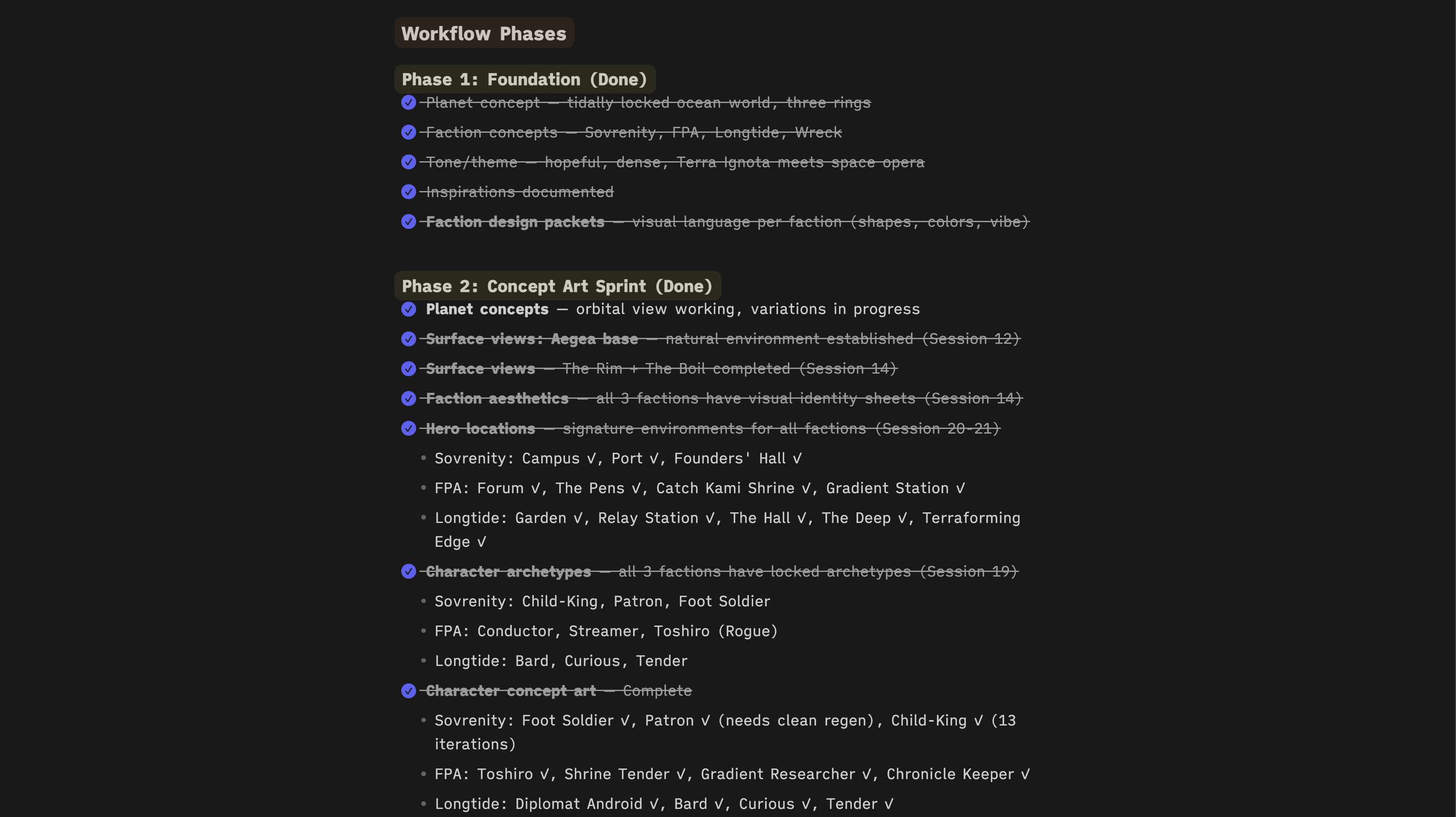
I had a creative process file where Opus 4.5 and I did some research on what it was like to create the Avatar world on James Cameron’s creative team, or to create Final Fantasy 7 with the Squaresoft team in 1997. What kind of project management approach did they take? What was their workflow like? How would they write out everything they did as a step-by-step sequence? Opus 4.5 spawned sub-agents, researched each topic, and then we thought through how to convert that into essentially a giant spec document for this imaginary world.
With each new chat session I would progress through this very rich AI-generated checklist that had entries like: sketch out the planet’s geography, its climate, different major locations, characters, plot points—all geared around concept art and creating these sort of asset bibles for different factions that maintained consistent styles.
This got truly exhilarating when I started “multi-Clauding” in numerous terminal windows, using speech-to-text to increase my WPM and juggling numerous aspects of the world at once, while beautiful concept art appeared in my asset folders via Nano Banana Pro and lore files populated the “EYEBALL-1” folder in my Obsidian vault. It felt like lucid dreaming.
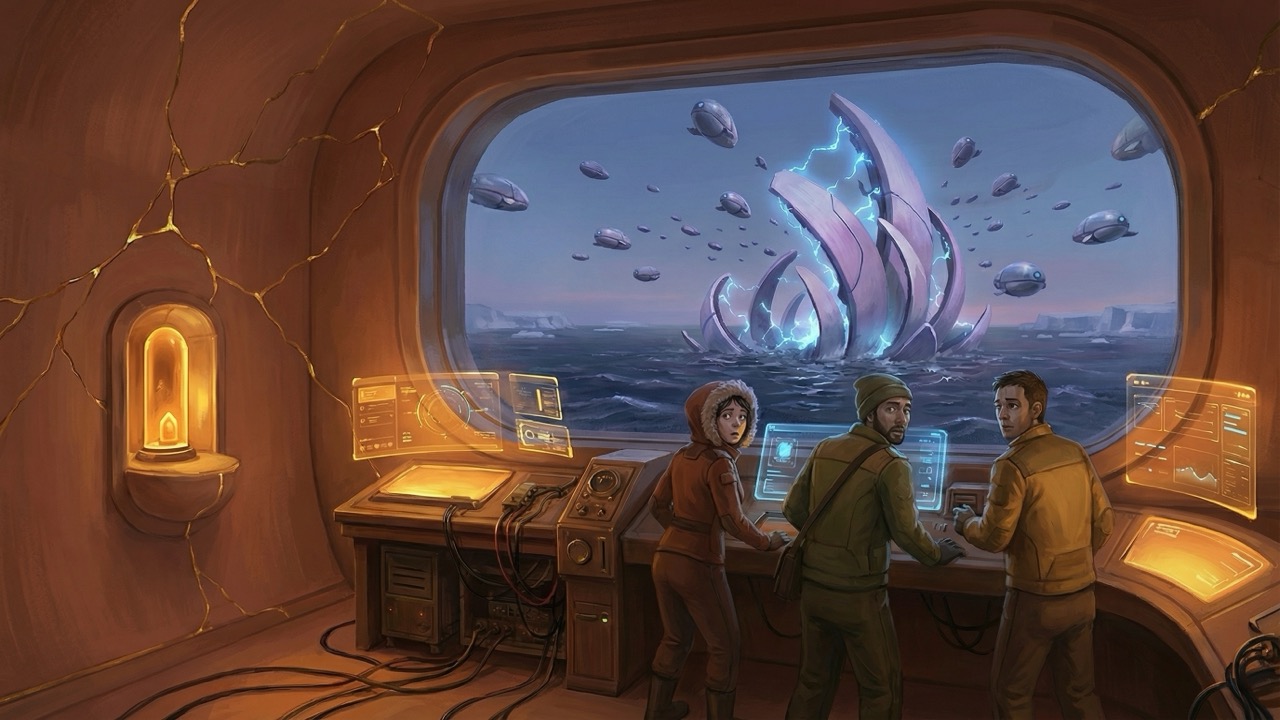
From the climactic scene of the pilot
I set out doing this because sci-fi/fantasy worldbuilding was something that I took extreme delight in as a kid, and I wanted to refill my creative well as I started to get burnt out by work a couple months ago. And I must say it exceeded my expectations, and my cup runneth over.
It’s in my nature to overcommit to things I’m excited by, and so I have been picturing using Runway ML and Veo 3 to convert this world into a tight eight-episode prestige HBO drama once I figure the story out. Cooler heads will probably prevail in the short term, but this has absolutely reoriented and expanded my vision of what AI can do right now.
I’m thinking about sharing a starter kit sometime soon, with a CLAUDE.md file inside an Obsidian vault with some prepackaged skills, so other people can try out this rapid, solo creative speedrunning. Let me know if that’s something you’d be interested in.
But before then I’m really, really excited to go back to the drawing board and try out this spec-driven vibe art approach for other wild bucket list dreams I have. My kingdom for a few more hours in the day. As they say, we are like trillion dollar James Cameron movie studios now. We might as well get used to it.